Before going into detailed analysis, you need to find the answer to the question “What is a business management system?”.
A business management system is a set of tools for planning resources within an enterprise and realizing the strategies, policies, rules, instructions, processes and procedures used in implementing and implementing business plans, strategies and all related management activities.
Different business management methods will lead to different thoughts and perceptions about the business management system, which can be divided into:
- Quality management system according to ISO 9000 (satisfactory and stable product/service quality).
- Internal control system (reduce risks).
- Lean manufacturing system (increase productivity, reduce costs, shorten time, increase production output).
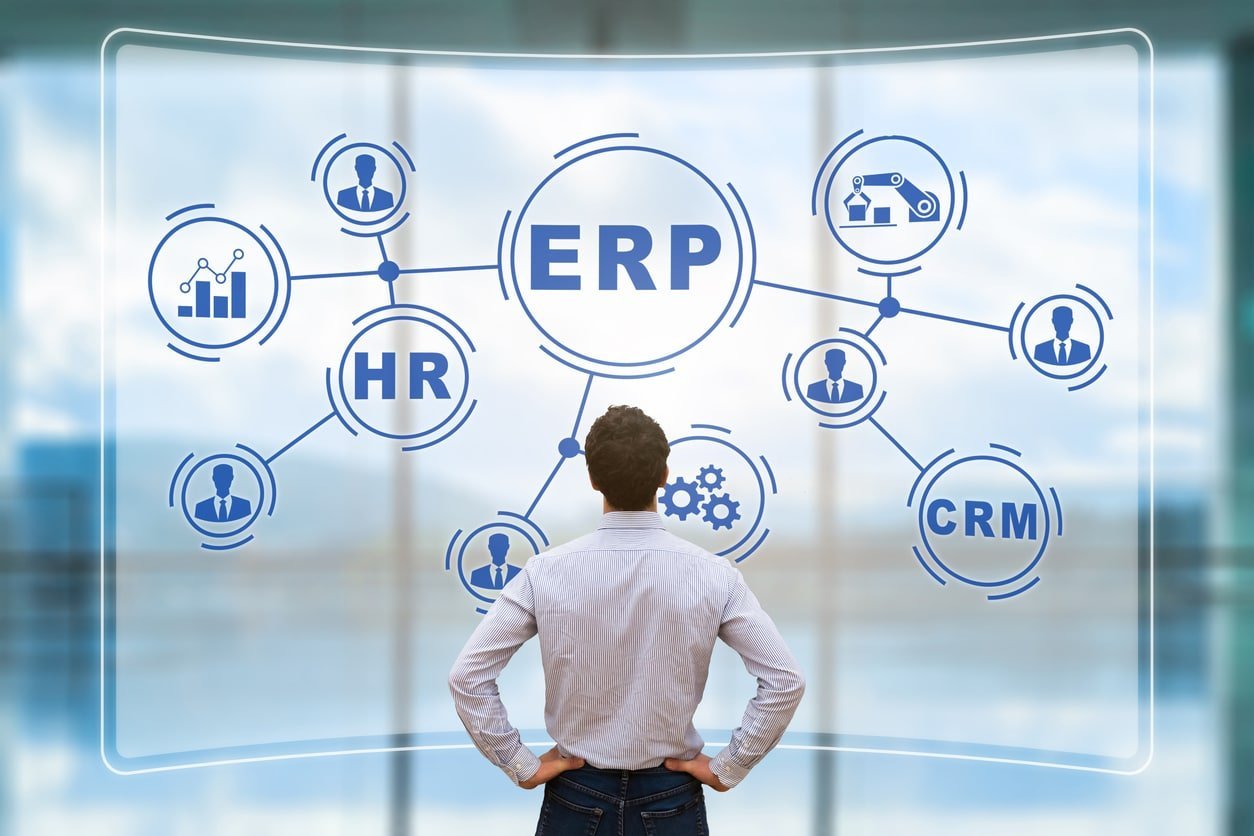
- ERP enterprise resource planning system (best management system, quick and timely handling of arising problems, reducing costs…)
It can be seen that effective management and use of resources is a prerequisite to create success and help businesses develop sustainably. Therefore, ERP software solutions are increasingly popular and widely used by businesses to shape their management systems.
Advantages of business management system
Competitive advantage
It's not wrong to say that ERP requires a large investment, but in the long run, your business may have to pay larger costs if you don't invest. While some manufacturers choose to stick to methods that have been successful in the past, others seek new technological solutions. With the many enterprise resource planning advantages the software provides, users can see improved productivity across departments. Implementing a business management system helps you stand out from your competitors because the risk of making business mistakes is reduced.
Improve process efficiency
An ERP platform eliminates repetitive processes and significantly reduces the need to manually enter information, which not only improves user productivity but also eliminates the possibility of inaccurate data that can lead to business mistakes. The benefits of implementing an ERP system in an organization will also improve day-to-day business operations by streamlining business processes, making it easier and more efficient for the company to collect data, no matter which department they are working in. Think of ERP as a ‘power assistant', designed to help businesses stay on track, pay attention to every detail and make work easier and more efficient, from software users to customers.
Accurate forecast
Enterprise resource planning software gives users, and especially managers, the tools they need to forecast more accurately. This helps software users, and businesses in general, to overview and plan appropriately from inventory and sales to finance and customer service. By making better forecasts, businesses can effectively reduce business costs, help save capital as well as be more proactive in management work. Because ERP's internal information is as accurate as possible, updated in real time, businesses can make realistic estimates and forecasts more effectively.
Cooperation department
No one wants to run a business where departments operate separately from each other. Interaction between departments is an important and necessary part of a business, especially when business projects often involve more than one department. With data centralized and consistent across ERP, departments can share information and collaborate whenever needed. The nice thing about ERP software is that it updates in real time, so whether you are using the ERP software in the morning, afternoon or from a remote location, the opportunity to communicate, share information and use data is always ready and accurate.
Scalable resources
The ERP system allows the addition of new users and functions to further develop the initially implemented solutions. No matter how big or small your business is, ERP will grow with it, attracting new users and new rounds of data whenever your business is ready to expand. So there's no need to worry about whether you need a completely new system when you add an extra user or two, just make sure that the enterprise solution you choose can grow with the business.
Integrated information
Enterprise resource planning software acts as a hub where all the important information your business and the departments within it need to maintain daily business operations and tasks. All information will be placed in a single location. This means you can integrate platforms like CRM (customer relationship management) software with your ERP software, keeping data consistent, accurate and unique. Your customers, orders, and placements will all be stored in one place. You also don't need to worry about whether the information you're consuming from the system is accurate, as it's updated in real time across the entire system. This improves your data accuracy, helping to eliminate potential business errors with incorrect data and analysis.
Save costs
Every business wants to have a detailed, specific financial plan and avoid making mistakes that can cause financial losses. With accurate, real-time information, enterprise resource planning software reduces administrative and operational costs, allowing businesses to use money in other areas of need. It allows manufacturers to proactively manage operations, prevent any disruptions and delays, break down information logs, and help users make faster decisions. If you've chosen the right solution for your business and the right vendor to meet your needs, you're sure to see a strong ROI. ERP software is available to help you become smarter about saving and spending as needed.
Processes are streamlined
As businesses grow, their operations become more and more complex, which can lead to mistakes that can cause high costs. Manufacturing software automates business operations across departments, providing accurate, real-time information to everyone using the solution, while eliminating manual work that can lead to errors. ERP increases efficiency and productivity by helping users navigate complex processes, preventing data re-entry, and improving functions such as manufacturing, order fulfillment, and shipping.
Portability
The advantage of an enterprise resource planning system is its focus on the customer. With ERP software, users have access to a centralized database from wherever you work and from different devices including laptops, tablets or mobile phones. The adaptability of an ERP software is important, as it increases productivity and makes information accessible no matter where you are.
Custom reports
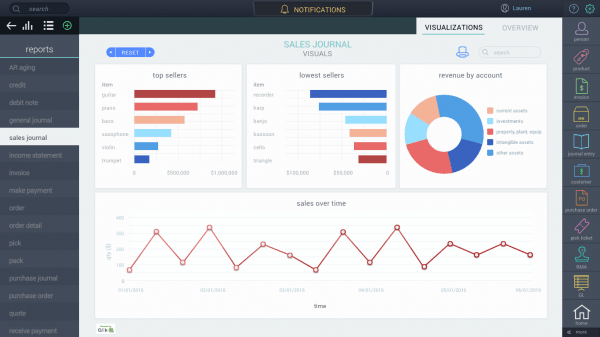
ERP software helps you build easier and more customizable reports, suitable to meet every need. With improved reporting capabilities, businesses can respond to complex data requests more easily and quickly. This improves productivity, completes processes faster, and helps finish projects without waiting time. Users can also run their own reports without needing IT help, saving you time for other projects.
Increase productivity
Save time and increase productivity, this is definitely something every business strives to achieve. Often, tedious tasks can take up a lot of time and lead to production delays, which affects a business's operations and even the customer's service experience. By automating processes, users have more time to work on other important, time-critical projects and tasks that may actually require more of your attention and time. ERP is designed with ease of use in mind, as well as helping businesses avoid unnecessary tasks, allowing you to shift your focus to other matters.
Comply with regulations
One benefit of ERP software that sometimes goes unnoticed is how closely it ties into regulatory compliance in manufacturing. Powerful ERP platforms are designed to track industry regulations and changes in compliance with these regulations. That enables users and businesses in general to comply with laws, regulations, guidelines and specifications related to business processes.
Flexible system
ERPs are not a one-size-fits-all proposition, however they can be tailored to suit the unique needs of each type of business. ERP platforms can adapt to the ever-changing needs of a growing business. When implementing ERP software, make sure you can customize the applications accordingly, so the system has all the functionality needed to support day-to-day business operations. Ensure that the ERP system can grow alongside the growth of your business, allowing you to add new users as needed.
Data reliability
ERP provides reliable data accessible from different locations (if deployed in the cloud) and through multiple devices including tablets and smartphones. With real-time updates, ERP improves data accuracy and consistency. With this, users can ensure that all data and analytics are used safely without the risk of errors. ERP user data can also be additionally secured through built-in firewalls and protection resources. Improved security eliminates the risk of important business information falling into the wrong hands.
Migrating to a cloud computing system is a big, complicated step for any company. Although this move brings many challenges, they are not insurmountable.
The key to overcoming that is for businesses to recognize those potential risks and obstacles from the beginning and create a plan to manage them. With careful planning and assessment, businesses can navigate the complexities of the cloud and tackle them piecemeal, while reaping the benefits of cloud-based IT operations.
To learn more about consulting services and IT system implementation at the company, please contact:
- Hotline: 0968.250.911
- Fanpage: https://www.facebook.com/futurehorizonvn
- Website: http://chantroituonglai.com
FUTURE HORIZON – ACCOMPANYING BUSINESSES

Author
Future Horizon
Mục tiêu thành lập và xây dựng với sứ mệnh mang lại những công cụ và giải pháp kỹ thuật số (công cụ bán hàng online) tốt nhất cho các cửa hàng, doanh nghiệp nhỏ, hay đơn giản là những người mong muốn đạt được thành tựu trên không gian mạng nhưng cần sự giúp đỡ.